Overview
If you have been weighing up your next move in the New Zealand property market, transportable homes deserve a serious look. With construction costs still high, lending conditions tight, and the rules around minor dwellings opening up new possibilities on existing sections, more and more Kiwi investors are turning to transportable homes investment NZ as a faster, more predictable way to grow their portfolio.
This guide explains why transportable homes have become one of the smartest entry points into property investment in 2026, what makes the numbers stack up, and how Exeter Homes fits into the picture.
Why Transportable Homes Are Catching Investor Attention
For decades, the standard path for property investors in New Zealand has been buying an existing home, renovating, and refinancing. That model still works in some markets, but it has become harder. Existing rental yields are tight, renovation costs have climbed, and finding a property that meets Healthy Homes Standards without significant work is increasingly difficult.
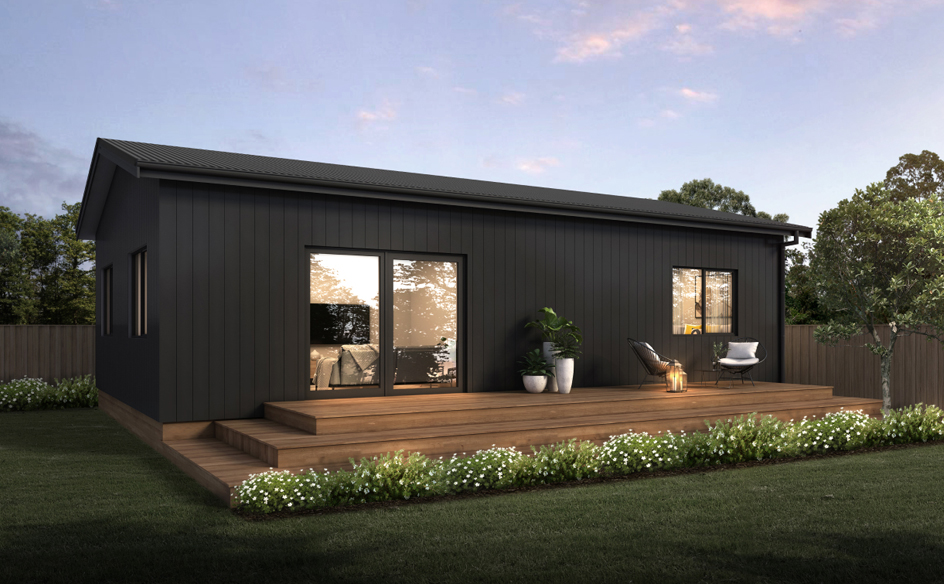
Transportable homes for sale NZ wide offer a different proposition. Instead of competing on the open market for older stock, you can place a brand new, fully compliant home on land you already own or on a section you purchase specifically for the purpose. The home is built off-site in a factory environment, delivered to your land, and rented out as soon as services are connected.
Investors are drawn to a few clear advantages:
- Speed to income. Because your home is built in our yard while site works run in parallel, you start earning rental income far sooner than you would with a traditional on-site build.
- Predictable costs. A fixed-price contract removes the budget surprises that often eat into investment returns.
- Compliance from day one. Every Exeter home meets the NZ Building Code and Healthy Homes Standards, so there is no remediation work to complete before tenants move in.
- Brand new appeal. Tenants pay a premium for warm, dry, modern homes, and a new build typically attracts longer tenancies and lower turnover.
Adding a Second Dwelling to Land You Already Own
One of the most powerful uses of a transportable home in 2026 is as a second dwelling on property NZ owners already hold. The recent changes to minor dwelling rules have made this easier than ever. In most residential zones, a self-contained dwelling of up to 70 square metres can now be added without a building consent or a resource consent.
That single change has unlocked a significant number of underused sections across the country. A back garden that previously sat empty can now host a fully consented, income-producing rental. For investors who already own a family home on a generously sized section, the cost of adding a second dwelling is dramatically lower than buying a new investment property outright. There is no second piece of land to purchase, no new mortgage on the underlying title, and the existing services can often be extended at modest cost.
Our Exeter Essentials range was designed with this exact application in mind. Compact, fully finished, and starting at $195,000, it gives investors a fast and affordable way to add a high-quality second dwelling without overcapitalising.
What the Numbers Look Like
Every site is different and every investor has a different strategy, but a rough framework helps. A new 3-bedroom Exeter Essentials home delivered to a North Island section, with reasonable site works, typically lands somewhere in the $280,000 to $320,000 range all-in. In a town like Rotorua, Tauranga, or Hamilton, a brand new 3-bedroom rental of this calibre will often achieve weekly rents that put gross yields comfortably ahead of older stock in the same market.
Beyond the rental yield, you are also adding a brand new asset to your portfolio. Unlike a 1980s rental that needs ongoing capital to stay compliant, a new transportable home requires minimal maintenance for the first decade and benefits from the same Master Build guarantee as any other Exeter project.
The other often overlooked factor is depreciation on chattels. A new build comes with brand new appliances, carpet, fittings, and fixtures, which can be depreciated over their useful life and reduce taxable rental income for the early years of ownership. It is worth speaking to an accountant who specialises in property to understand how this applies to your situation.
Who Is This Strategy Working For?
We are seeing transportable homes used by a wide spread of investors:
- Families adding a rental to their existing section. Often this starts as a granny flat for ageing parents and transitions to a rental once the family situation changes.
- Buy-and-hold investors building on bare land. Purchasing a section and placing a new transportable home on it can deliver a turnkey rental in months rather than years.
- Lifestyle block owners. Adding a second dwelling on rural land is a popular use case, particularly where the existing main house is large and the section has spare capacity.
- Small-scale developers. Two or three transportable homes on a single subdividable site can offer a more efficient build path than going through a full design-and-construct process for each unit.
Why Choose Exeter as Your Minor Dwelling Builder
Searching online for minor dwelling builders NZ wide will return plenty of options. The reason Exeter Homes stands out for investors is simple: we build every home to the same standard, regardless of price point. Whether you are choosing the entry-level Exeter Essentials or stepping up to the more spacious Exeter Essence range, you get the same construction quality, the same registered Master Builder workmanship, and the same fixed-price certainty.
Every home is built in our Rotorua yard with a dedicated project coordinator on site. We hold our own building consent for the yard build, which means every home arrives fully inspected and ready for council sign-off on your section. For an investor, that level of process control translates directly into faster delivery and fewer surprises.
What About Prefab Homes NZ More Broadly?
It is worth being clear on terminology. Prefab homes NZ, modular homes, new relocatable homes NZ, and transportable homes are often used interchangeably online, but there are some genuine differences. The Exeter approach is built around fully assembled, transportable homes delivered as complete units. You are not getting a kitset, a flat-pack, or a partially built shell. The home that leaves our yard is the home that arrives on your land, kitchen and bathroom installed, joinery in place, ready for connection to services.
For investors, that matters. The fewer trade subcontractors you have to coordinate on site after delivery, the faster you can move from settlement to tenanted.
Ready to Run the Numbers on Your Site?
If you are seriously considering a transportable home as your next investment, the best first step is to look through our current plans and shortlist two or three designs that suit your section and budget. From there, our team can pull together a realistic project cost based on your specific land, including site works and council requirements.
We have built homes for first-time investors adding their first rental, and for experienced portfolio holders looking for a more efficient delivery model. Whatever stage you are at, we are happy to have a no-pressure conversation about whether the numbers work for you.
Get in touch with us through our contact page, call us on 0800 613 213, or email sales@exeterhomes.co.nz, and we will help you work out whether a transportable home is the right next move for your portfolio.